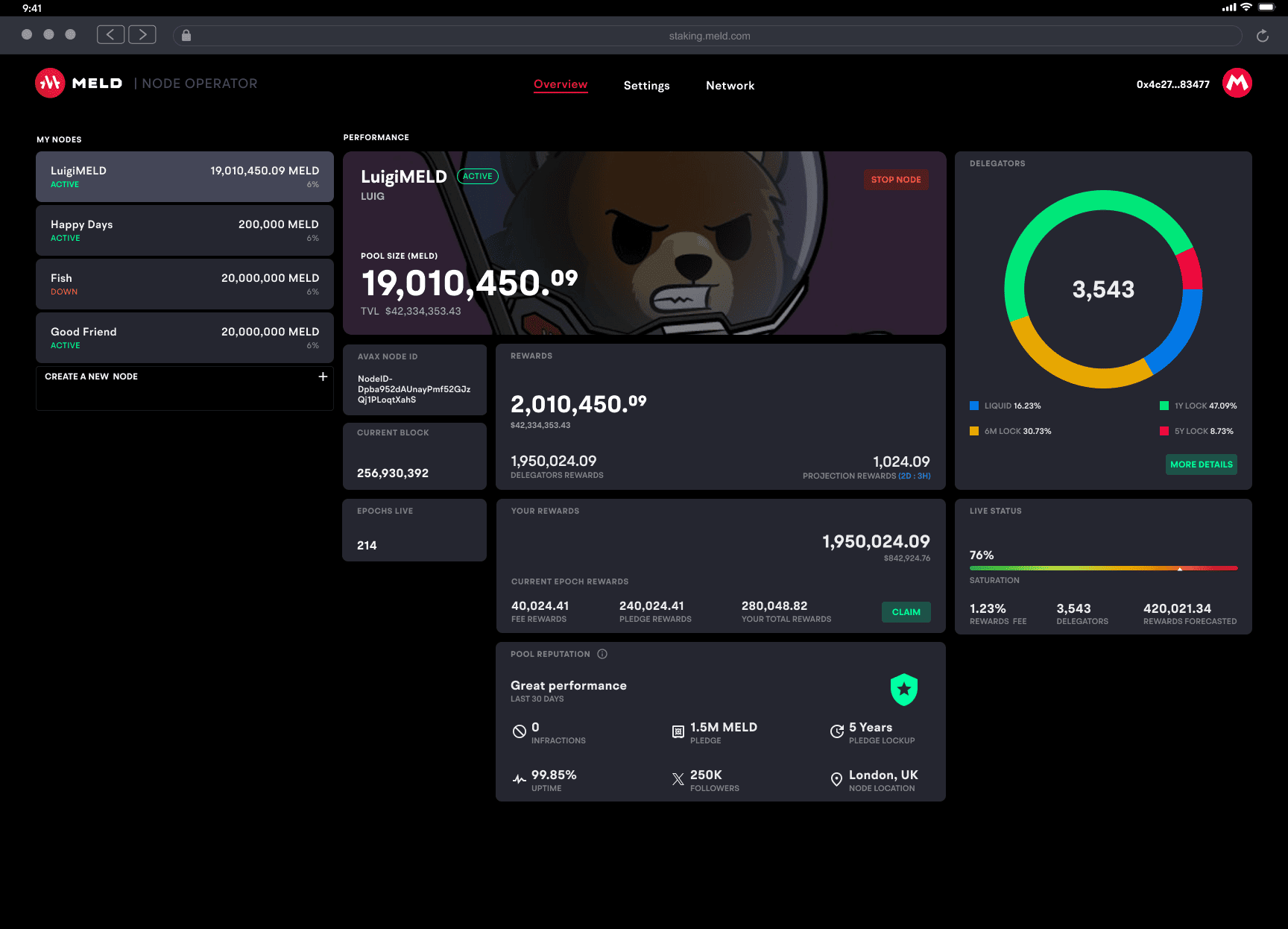
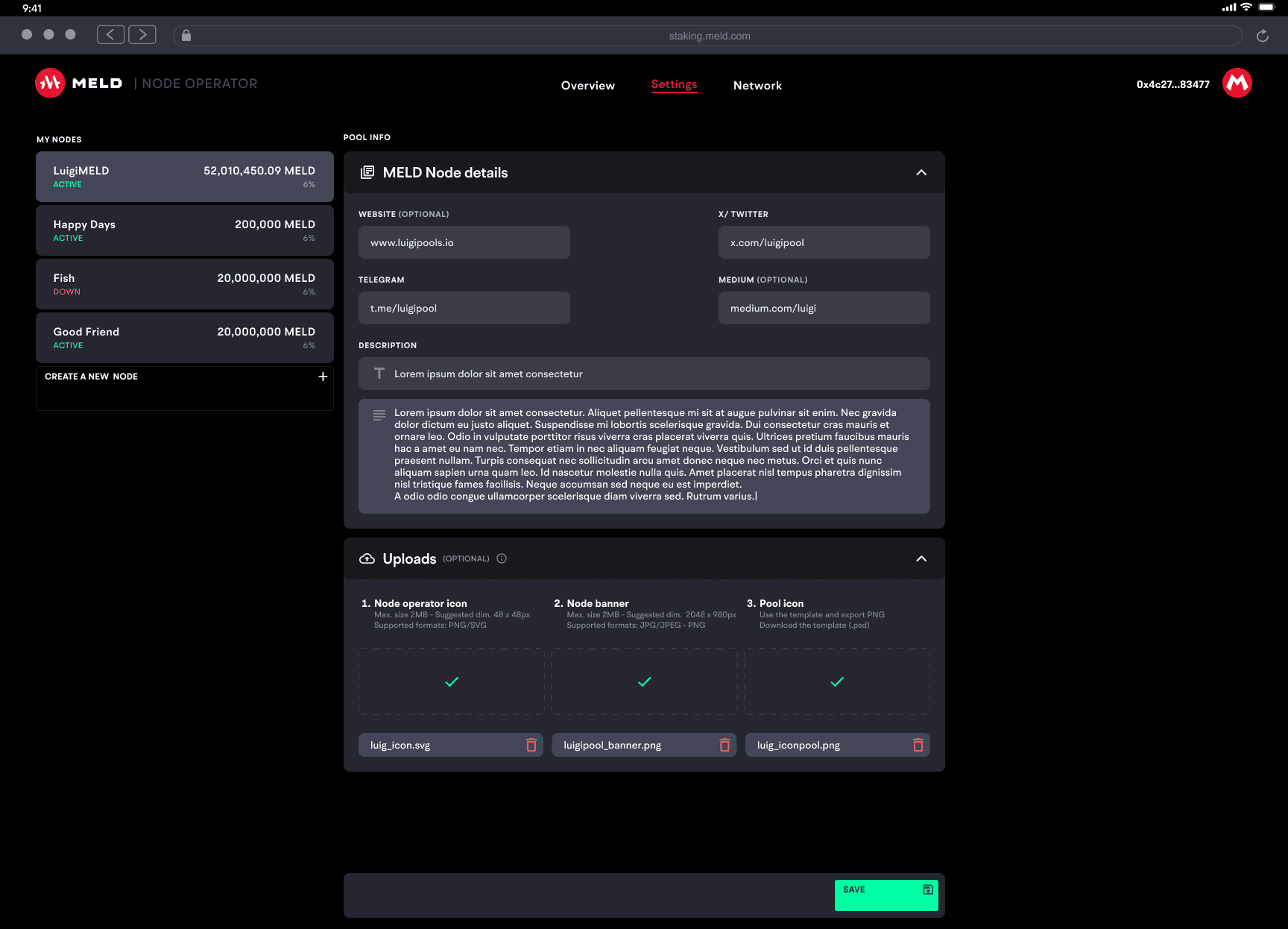
This project focused on designing a clear and trustworthy experience for people who interact with staking pools. Delegators needed an easy way to compare pools and decide where to stake. Node operators needed a place to manage their pools and present themselves clearly. Governance needed tools to monitor behaviour and act when necessary. We also needed a way to keep all pool icons and token images accurate and consistent as the ecosystem grew. The goal was to turn a complex blockchain system into something simple, visual and easy for anyone to understand.
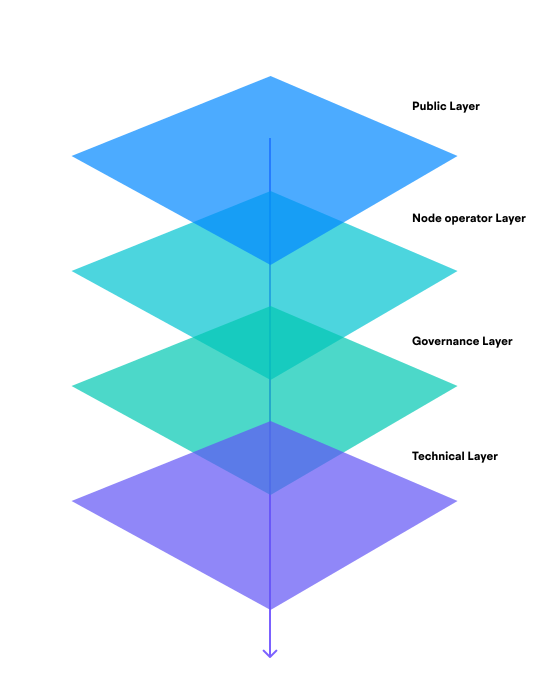
In this project I designed a multi layer experience for a staking ecosystem, where everyday delegators, node operators and protocol governance all interact with the same network in very different ways. The public layer is the only one most users see, yet issues in any of the deeper layers always reach the surface and directly affect user trust. The complexity came from aligning public pool discovery, operator tools, governance oversight and a technical layer that handles the visual identities of pools and assets. All of this needed to feel simple, even though the system underneath is highly technical.
A staking ecosystem, where users lock their assets to support the network and earn rewards, depends heavily on transparency and reliable information. Without a unified solution, fragmentation leads to experiences where legitimate pools look suspicious because imagery is missing or inconsistent, and where misbehaviour is detected too late to protect users. The project required creating a structure that hides this complexity and turns it into an experience that feels coherent, safe and intuitive.
A staking ecosystem brings together different user groups who all rely on the same data, but expect completely different experiences. Delegators must compare pools and decide whom to trust. Node operators need a control center to manage performance, identity and rewards. Governance teams must monitor behaviour, detect irregularities and act when necessary. At the same time, the number of pool icons, banners and token graphics increases continuously, which creates visual inconsistencies and confusion.
Although the public layer is the visible entry point, fragmentation in the operator layer, the governance layer or the technical layer ends up affecting delegators. A missing icon can make a pool appear unreliable. An incorrect token graphic can produce uncertainty. A delayed slashing action can expose users to unnecessary risk. These issues revealed the need for a unified structure that supports clarity at every level of the ecosystem.
The goal was to create a cohesive platform where all layers work together in a transparent and trustworthy way. Delegators should discover and compare pools with confidence, without needing deep technical knowledge. Node operators should manage every aspect of their pools in a single control center. Governance teams should have the clarity to detect issues early and communicate decisions in a way that reinforces trust.
The platform should also maintain a consistent and accurate visual representation of pools and tokens. This helps avoid the industry problem of missing icons, low quality assets or misleading visuals. The desired outcome was a human centered environment where complexity becomes invisible and interactions feel clear, reliable and aligned with the user’s expectations.
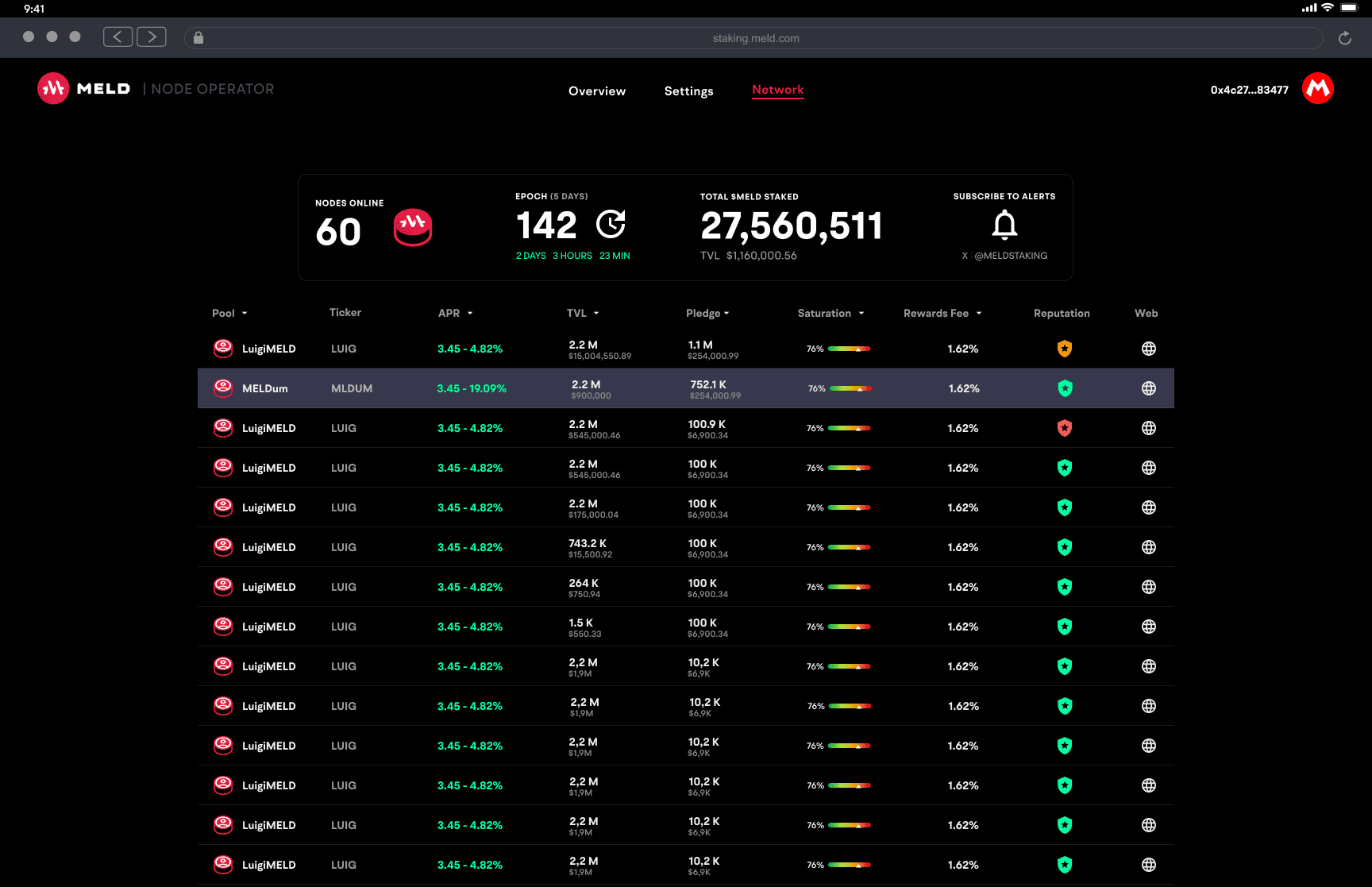
The public layer presents delegators with a clear and trustworthy overview of all staking pools. It allows them to compare metrics, understand operator reputation and interpret performance without facing technical barriers. Strong visuals, accurate icons and consistent language help users feel safe as they navigate the ecosystem.
The operator layer acts as a control center. Performance insights, rewards, saturation, branding, descriptions and technical status all live in one environment. The goal was to reduce fragmentation and give operators a coherent space where they can manage their pool identity and operational responsibilities with ease.
The governance layer provides the visibility and clarity needed to oversee the network. It helps identify abnormal behaviour, apply slashing when required and communicate these actions transparently. This reduces ambiguity for delegators and keeps the ecosystem honest and predictable.
The technical layer protects the visual identity of the platform. At the beginning, icons for tokens and pools were added manually, which became time consuming and impossible to scale. It also increased the risk of incorrect or outdated icons, a situation that directly affects user trust.
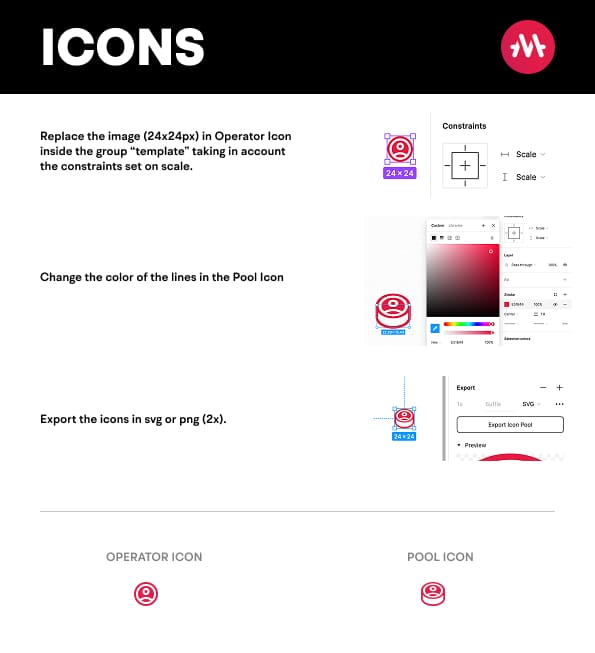
To solve this, I designed a guided system where operators and asset owners upload their own icons, banners and token graphics following clear quality and format constraints. This ensures that the visual language remains accurate and consistent even as new pools and assets are added. It also prevents misleading imagery, a common problem across crypto products.
I was responsible for the UX flows and the conceptual foundations behind the templates and the systematisation of visual assets. I collaborated closely with engineers to understand which data could be retrieved from the blockchain, such as pool saturation, pledge and performance, and which information could be retrieved from external services like social media. I designed each layer from end to end and every decision was validated with the Staking Product Owner and the CEO of MELD to ensure technical feasibility and strategic alignment.
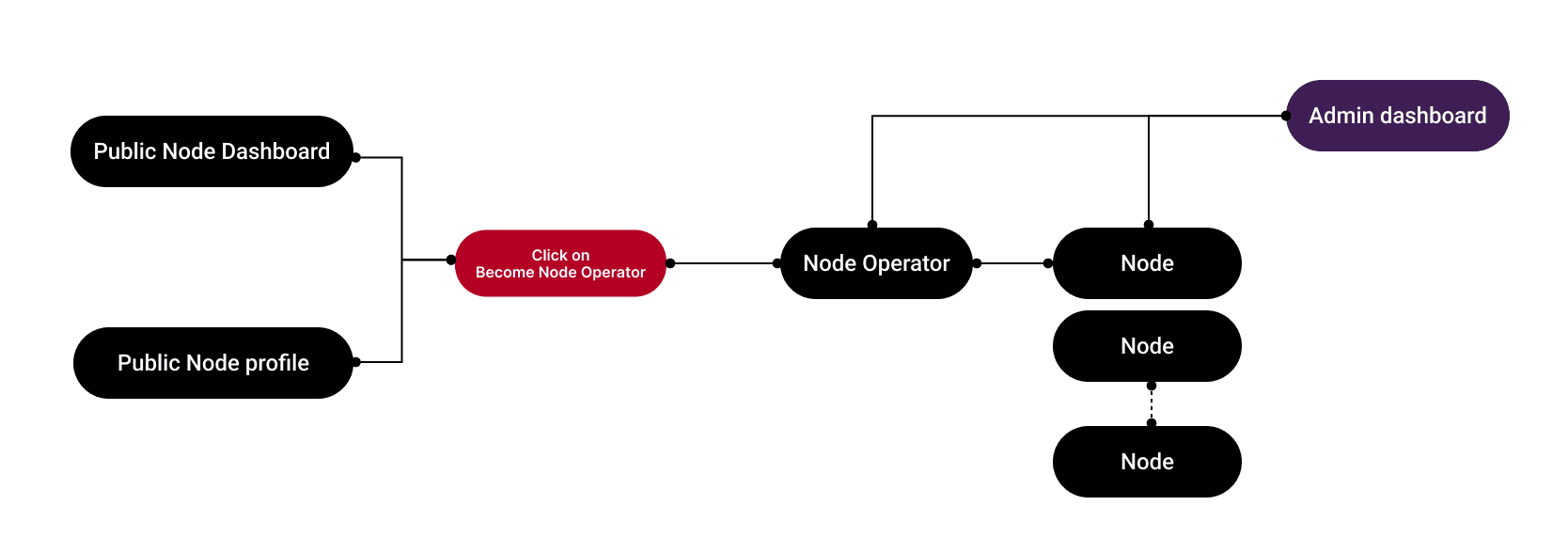
The IA reflects how each layer connects to the others, showing how public exploration, operator management, governance oversight and technical consistency form a complete system.
The dark theme reflects MELD’s identity and maintains continuity with the wallet and web application. Bold colors help guide the eye across a dense landscape of metrics and indicators. They add personality and soften the rigid tone that usually dominates financial interfaces, making the experience more welcoming for non technical users.
A three column grid mirrors the MELD wallet layout, creating familiarity across products. Small trend charts provide instant visual cues and reduce the cognitive effort required to interpret numerical patterns. Color based indicators signal changes and risks faster than text, which supports immediate and intuitive comprehension.
The final system improved clarity and trust across the entire staking experience. Delegators can now compare pools through reliable visuals and straightforward information. Node operators gained a focused control center that simplifies management and strengthens their public presence. Governance teams gained transparency and visibility, which supports early detection of issues and fair communication of decisions.
The new technical layer solved the long standing challenge of missing or inconsistent icons. What began as a manual and unscalable process became a structured pipeline that protects visual accuracy and prevents confusion. The ecosystem can now grow without compromising consistency. We decided to make it in Figma, because other softwares might need suscriptions.
Overall, the platform became more predictable and coherent. It removed ambiguity for users, empowered operators to present themselves professionally and allowed governance to act with clarity. The experience now supports the ecosystem’s growth rather than being strained by it.
This project allowed me to design different touchpoints of the same subject and to understand how each perspective influences the experience as a whole. I explored how users see staking pools, how operators manage them and how governance monitors them. It felt like assembling a puzzle where each piece reveals another dimension of the system. It strengthened my appreciation for design as a cycle of interactions, services and decisions that shape how an experience lives in the mind of the user.